
The development has elicited huge response from the country's top information technology companies. At least seven players, including Infosys, HCL, Tata Consultancy Services and its subsidiary CMC, are in the fray to develop a biometric card and the infrastructure that can handle 12 million new users annually.
Is Bangalore, India's Silicon Valley and home for some of the biggest information technology firms in the country, slowly losing out to Chennai? It seems so, considering the investment plans of leading IT companies.

Benchmark stock indices Sensex and Nifty closed with losses in highly volatile trade on Thursday as banking and financial stocks retreated amid a weak trend in global equity markets. The 30-share BSE Sensex declined 89.14 points or 0.15 per cent to settle at 57,595.68. During the day, it touched a low of 57,138.51 and a high of 57,827.99. The broader NSE Nifty dipped 22.90 points or 0.13 per cent to settle at 17,222.75.

Equity investors became richer by over Rs 5.77 lakh crore on Tuesday, helped by a rally in the broader market where the BSE benchmark jumped nearly 2 per cent. The BSE Sensex zoomed 934.23 points or 1.81 per cent to settle at 52,532.07. Driven by the rally in equities, the market capitalisation of BSE-listed firms jumped by Rs 5,77,006.83 crore to stand at Rs 2,40,63,930.50 crore. "Absence of fresh selling triggers in the domestic and global economy along with falling commodity prices relieved the heavily discounted equity market to showcase recovery.
India and China together account for 32 of the 50 companies in Forbes' sixth annual 'Asia's Fabulous 50 listed companies'.
Indian IT companies TCS, Infosys, Wipro and HCL Technologies have issued advisories to their employees working in US, whose East Coast is battered by a superstorm.
The decline in these was mostly due to company or sector-specific issues, say experts.
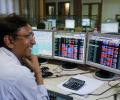
Benchmark equity indices Sensex and Nifty closed higher on Friday after two days of fall, helped by buying in metal, telecom and auto stocks amid a firm trend in global markets. Automakers led by Maruti Suzuki India, Hyundai, Mahindra & Mahindra reporting robust wholesales of passenger vehicles and GST collections crossing Rs 1.50 lakh crore for the third straight month in May also added to the optimism. The 30-share BSE Sensex climbed 118.57 points or 0.19 per cent to settle at 62,547.11.
The six IT majors -- TCS, Infosys, Wipro, Satyam, HCL Technologies and Congizant -- along with two BPO giants Genpact and WNS are recording a yearly growth rate of over 40 per cent, according to technology consultancy firm Everest Group. Apart from these big names, all the other smaller players are struggling at a growth rate of around 20 per cent a year, Everest Group CEO Peter Bendor-Samuel told PTI.

Communication has instilled a sense of trust and belief among the employees.
Eyeing to make 8 buys to meet their revenue guidance.

Ten billionaires including Mukesh Ambani, Sunil Mittal are in the world's richest list.

ITC was the biggest gainer in the Sensex pack, rising nearly 3 per cent, followed by Kotak Mahindra Bank, ICICI Bank, Maruti, Bharti Airtel, State Bank of India, Sun Pharmaceutical Industries, Axis Bank, Reliance Industries, Hindustan Unilever and JSW Steel. On the other hand, Infosys, UltraTech Cement, HCL Technologies, Bajaj Finserv, Larsen & Toubro, Titan, Tata Consultancy Services and Wipro were the laggards.

Despite the wobble in the markets over the past few weeks, Indian equities remain expensive as measured by several yardsticks. India's market capitalisation-to-GDP ratio, for instance, has touched a multi-year high. The ratio is currently at 116 per cent, based on the FY22E gross domestic product (GDP) number, above its long-term average of 79 per cent.

Clients are seen realigning their tech strategy by moving works from own captives to third-party service providers which is mostly benefiting to large companies such as Infosys, TCS, Wipro or HCL Technologies.

Among the Sensex firms, Larsen & Toubro, Bharti Airtel, HCL Tech, Tata Motors, Sun Pharma and Tata Steel were the major gainers. On the other hand, Nestle, Asian Paints, Bajaj Finserv, HDFC Bank and Axis Bank were among the laggards.

'His working style differs from his father as he is a quick decision-maker.'

Infosys aims to achieve an aspirational goal of $20 billion in topline by 2020.

From the Sensex pack, NTPC, Tata Motors, Titan, Larsen & Toubro, Reliance Industries, IndusInd Bank, Infosys, HDFC Bank and Power Grid were among the major gainers. Wipro and Tech Mahindra were the laggards.

'We're seeing major Bollywood celebrities, fashion icons, and even movie studios all wanting to build Metaverse experiences'

The recent sell-off in IT stocks such as Infosys and Tata Consultancy Services (TCS) has resulted in a sharp decline in the IT sector weighting in the Nifty50 index. The sector's weighting in the index has slipped to a five-year low of 12.2 per cent, down from the 17.7 per cent at the end of March 2022. The top IT companies - TCS, Infosys, Wipro, HCL Technologies, and Tech Mahindra - accounted for 13.6 per cent of the index at the end of March this year.
The broad idea is to help freshers and high-potential employees develop soft skills not generally taught at universities, and simultaneously increase retention rates in an industry that has attrition rates between 30 and 50 per cent. The industry, according to Nasscom estimates, accounts for almost $11 billion and employs slightly over 700,000 professionals (in terms of direct employment).
With companies looking to provide the right balance between professional demands and personal lives for its employees, HR experts believe the concept is one of the main drivers to stem attrition and enhance productivity. Global science products and services firm Dupont Vice President Human Resources Maritza Poza-Grise told PTI that for managers it is critical to engage their workforce and the organisation goals have to be transformed into personal goals for the employees.

Ayan Pramanik and Shivani Shinde Nadhe report on the uncertainties that have dragged down shares of TCS, Tech Mahindra and HCL Technologies.
The recent multi-million dollar deals by the likes of TCS, Wipro and HCL Technologies buttress the fact. If the economy does not lose more steam, these companies say the IT sector may see a semblance of normalcy by year-end.

From the 30-share pack, Indusind Bank, Axis Bank, Maruti Suzuki, Bajaj Finance, Bajaj Finserv, UltraTech Cement and Mahindra & Mahindra were the biggest drags, tumbling up to 7.63 per cent.
Fresh suitors have emerged, and a cleanup is proceeding under a board appointed by the government. But the fraud leaves a cloud over Indian outsourcing.

The first quarter earnings season will dictate the trend in the equity markets in this holiday-shortened week amid absence of major macroeconomic drivers, say analysts. Besides, lacklustre global markets may increase volatility in the market, they added. Equity markets would remain closed on Wednesday for Bakri-Id.


Equity benchmarks shrugged off lacklustre global cues to clock smart gains on Tuesday, buoyed by strong buying interest in index heavyweights Reliance Industries and HDFC twins. However, a depreciating rupee and unabated foreign fund outflows capped the gains, traders said. The 30-share BSE Sensex rallied 562.75 points or 0.94 per cent to settle at 60,655.72.

The market capitalisation of BSE-listed firms reached an all-time high of Rs 288.50 lakh crore on Wednesday amid an ongoing rally in equities, as the benchmark Sensex settled above 63,000-level for the first time ever. The 30-share BSE barometer climbed 417.81 points or 0.67 per cent to settle at 63,099.65, its fresh record closing high. During the day, the benchmark jumped 621.17 points or 0.99 per cent to 63,303.01, its lifetime intra-day peak. Extending its winning momentum to seventh day, the Sensex has rallied 1,954.81 points or 3.19 per cent during this time.

Tata Consultancy Services (TCS), the group's biggest cash generator, overtook Vedanta to become the highest dividend payer in India in FY23. The IT services major paid Rs 42,090 crore for FY23, up 167.4 per cent from Rs 15,738 crore for FY22. The 10 biggest payers together shelled out Rs 2.06 trillion for FY23, more than double the Rs 98,371 crore for FY22.
 © 2026 Rediff.com - Advertise with us - Disclaimer - Privacy Policy - Sitemap - Feedback - About us - Terms of use - Grievances